Textile QC platform — web + desktop
MagicQC
- Status
- In production
- Role
- Project Lead
- Organisation
- Robionix Technologies
- Year
- 2024-2026
The problem
Finished garments are size-checked by hand with a tape measure, so QC is slow, inconsistent between operators, and impossible to audit after the fact — and the brands, operators and purchase orders behind that QC line have no system of record at all.
Outcome
- Delivery
- Web + desktopDeliveryBoth in production, linked over a GraphQL API.
- Pieces / day
- 500+Pieces / daySustained production volume on the deployed measurement system.
- Measurement accuracy
- 90%+Measurement accuracy
- Deployment
- Live on EC2DeploymentNot a demo - running against a real line.
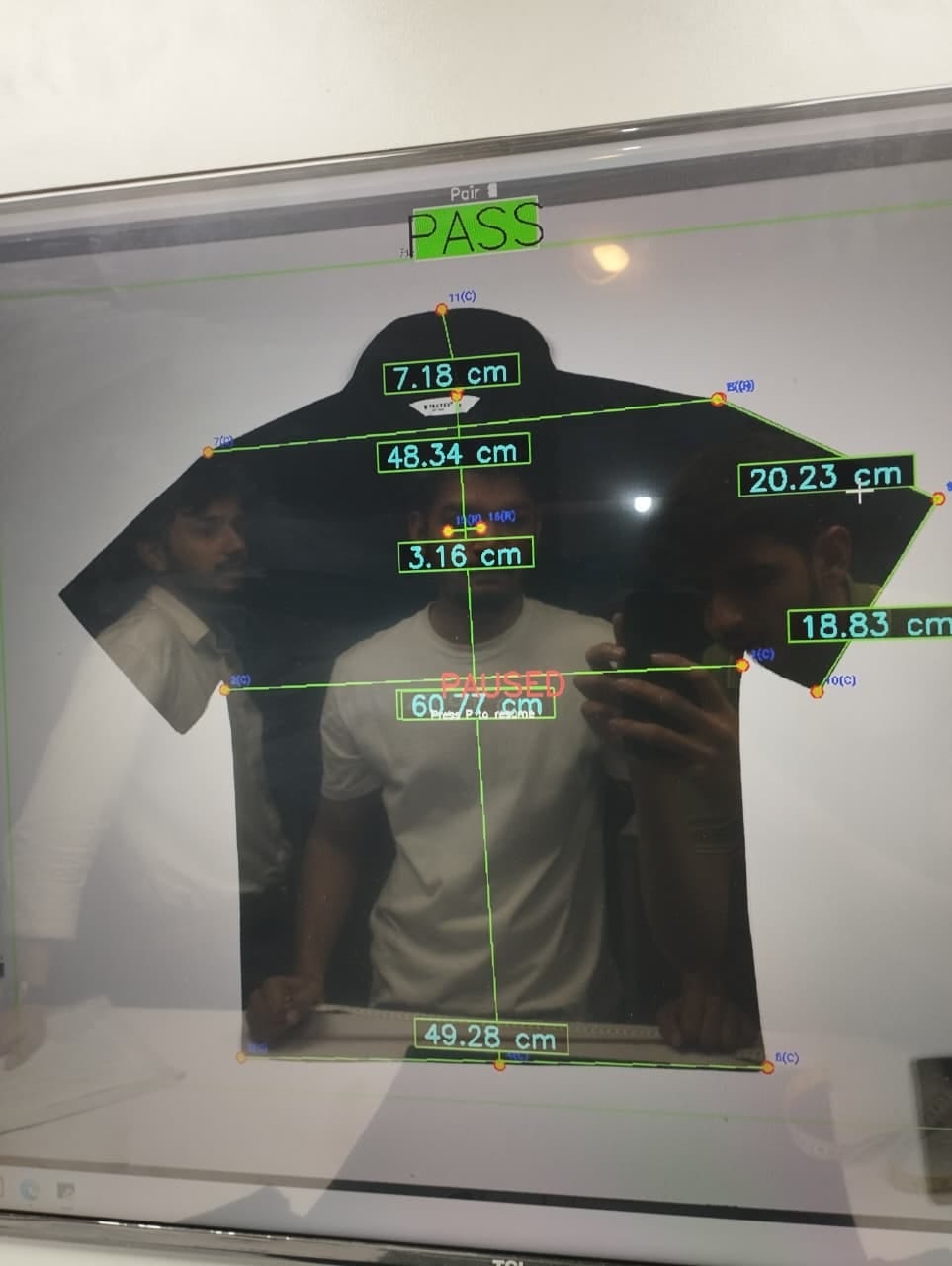
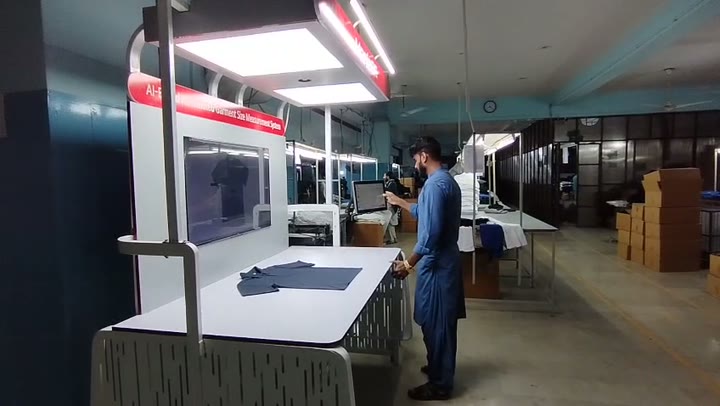

The measurement view: a shirt checked to spec, PASS, every panel dimension in centimetres.
Approach
- 01
Built an automated size-measurement pipeline that extracts each piece’s dimensions from a fixed-camera capture, replacing manual tape measurement.
- 02
Served the model behind a FastAPI inference API, containerised with Docker and deployed live on AWS EC2 for continuous production use.
- 03
Delivered it as a complete solution, not just a model: a desktop measurement app (Electron.js + FastAPI + the CV pipeline) on the factory floor, and a web app (Laravel/PHP + Vue + React/TypeScript) for brand, operator and purchase-order management — the two talk to each other over a GraphQL API. Both are running in production in the textile industry.
- 04
Led the project end to end - dataset curation, training, API design, deployment and monitoring - rather than handing a notebook to someone else.
- 05
Hardened the loop for real conditions: throughput at production volume rather than benchmark-set accuracy.
Stack
- PyTorch
- OpenCV
- FastAPI
- Electron.js
- Docker
- AWS EC2
- Python
- GraphQL
- Laravel
- PHP
- Vue.js
- React
- TypeScript
- Tailwind CSS
Restricted. Client system. Source is not public; the metrics, the deployed-rig photography and the public product site are what can be shown.